30.07.2026
Will AI change the world?
When I was growing up in the 1960s, way before computers, mobile phones and the internet, our vision of the future was based around space travel and robots. The space race developed, reaching its peak with the first moon landing in 1969, but tailed off through the 1970s.
Robots - those with a human form that might manage everyday household activities such as cleaning, etc - never took off, with designers struggling to master complex human body movements and balance. Only relatively recently are robots able to move in a more human like way and interact with other people and objects.
However, the most significant development was the personal computer and software from the early 1980s, and by the end of the decade it had already made an impact on almost everything. Today, 50 years on, we are surrounded by all manner of ‘tech’, including AI, which many think will ‘take over the world’, relegating human input to a minimum.
Probably the most common way most of us currently interact with AI is the chatbot, which aims to deal with enquiries about your bank account, utility bill or theatre/concert tickets. It is great if you want to ask the totally obvious, but severely lacking if you have a real problem that requires more consideration and information.
Software/tech/AI can only do a limited number of things and most production requirements still require human input. For many years, equipment manufacturing processes have benefited from industrial robots to carry out perfect welds on a boom or chassis, or rapidly cut materials to incredibly accurate tolerances.
Many Asian companies started to industrialise a little later than North America or Europe, and as a result now have ‘state of the art’ manufacturing facilities that maximise technology and robotics, resulting in massive output combined with high quality and lower costs. A Win-Win situation for all except those with older, dare I say, outdated manufacturing plants.
But we are still a long way from robots doing human tasks such as repainting domestic doors and walls, servicing your boiler, cooking meals or even handing a cup of coffee to a person.
Or are we?
Robotics technology has come a long way in the past couple of years, as can be seen with the Tesla Optimus Gen 3 humanoid robot. Not only can it carry out 100 domestic tasks a day, but it has the ability to self-learn and share knowledge with other Optimus robots, with the ultimate aim to produce human level precision in an even wider range of tasks.
But it will be a long time before a humanoid robot can fully replace an actual human. In the meantime, industrial robots are starting to find their way into front line, on-site applications. In the
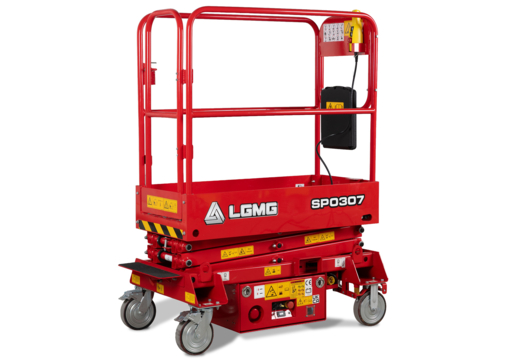
July/August issue of Cranes & Access, we reported on a new scissor lift mounted drilling robot which overcomes ‘White Finger’ syndrome.
A human still operates it, but does not need to hold the drill, allowing them to work for eight hours a day, dramatically reducing contract lengths.
Back in the 1960s, humanoid robots were a dreamer’s fantasy, but 50 years later we might be at the point of making robots that can actually help with routine everyday tasks.
Now, if the humanoid robot could include improved AI knowledge….
Mark Darwin
Any comments or feedback is most welcome







Comments